
Preparing for a Parent's Death Together, Before the Crisis Comes

Most families do not fall apart at the funeral. Some fall apart in a hospital hallway a few weeks before it. Many fall apart in the months after, over the money.
Picture it. Your mother is in a bed upstairs and cannot speak for herself right now. The doctor needs to know whether to start a feeding tube. Your brother says she would want everything done. Your sister says Mom told her years ago she never wanted to live like that. Nobody has it in writing. The sister who sold her own place and moved in with Mom two years ago has been to every appointment, filled every pill box and taken every late-night call, and she is furious that the brother who flew in yesterday is suddenly making decisions. The brother is furious that nobody told him how bad it had gotten.
Everyone in that hallway loves her. Everyone in that hallway is also exhausted, frightened, and already grieving. It is the worst room in the world to make a decision, and it is where most families end up making theirs.
And if the hallway does not break you, the inheritance often does. A few weeks after the funeral, the trustee's letter arrives and you all see the trust for the first time. Your sister, the one who moved in to care for Mom, finds out she gets the same share as everyone else, and that the house has to be sold right away. Your brother finds out about a loan Mom gave her years ago that nobody mentioned. Someone notices the jewelry box is empty. Within a month the group text has gone quiet, and the next time you are all in one room, it is with lawyers.

This post is about not ending up in either place. It is about preparing for a parent's death together, while there is still time: while your parent can still tell you what they want, while everyone is still speaking to each other, and while nobody is running on four hours of sleep. It covers the conversations, the paperwork, the money, the belongings, the roles, the last months, and the first weeks after. It also covers the step most guides skip: sitting down as a whole family, with a steady person in the room, before the crisis instead of during it.
It is long on purpose. Read it in pieces if you need to. Send it to your siblings. If you only have five minutes, skip to the short list near the end, called The card. Otherwise, here is what this covers:
- What I see, a year or two later, what "settled" means, and why families come apart at the end
- Talking with your parent, and what to do if they will not talk
- The deadline nobody mentions, and the documents
- Money, belongings and roles
- The questions to settle ahead of time, including the caregiver and the house
- Why it is still your parent's to give
- A guided family conversation, who can guide it, and where I can help
- The last months, the first days and weeks after, and the grief
What I see, a year or two later
I have worked with many, many people in the year or two after a parent or another loved one died, people who were among the heirs. This post exists because of them. They come to me carrying two losses, not one.
The first loss is the person who died. The second is harder to name. It is watching the rest of the family change. Brothers and sisters who sat together at the bedside become, within weeks, all about the money. Who gets the house. Why she got more. What he took from the garage. The relationship that was supposed to carry everyone through the grief starts to matter far less than getting as much as they can. Sometimes it is plain greed. More often, grief and old hurt have nowhere else to go, and money is the only thing left on the table.
For the person who still cares about the relationship, it is devastating. Many of the people I work with describe that scramble for the money as traumatizing. They lose a parent, and then, piece by piece, they lose their siblings too. And the second loss can outlast the first.
Preparing ahead of time does more than make the months after a death more peaceful. It gives brothers and sisters their best chance to stay brothers and sisters: still able to sit at the same table and love each other, without the inheritance standing between them.
What "settled" actually means
Preparing does not mean it will not hurt. Your parent is still going to die, and you are still going to grieve. Nothing on this page changes that, and nothing should.
What preparation changes is everything around the grief. When a family has done this work, the death arrives in a house that is ready for it. Your parent's wishes are known and written down. The person who will speak for them has been chosen, and everyone already knows who it is. Someone knows where the papers are. The hardest conversations have already happened, so the last weeks can be spent on what actually matters: sitting with them, telling the old stories, saying what needs to be said.
That is what I mean by settled. Not painless. Clear. Clear enough that when it happens, you have a far better chance to grieve instead of fight.
Why families come apart at the end
Siblings rarely fight about the thing they say they are fighting about.

In the Capacity for Self Method, I work with three Selves, and each one lives in a different time. The Survivor Self is the planner and protector. It lives in the future, scanning for what could go wrong. The Young Self holds what the body has been through, and it lives in the past. The True Self is the part of you that can be present, warm and steady, right now.
A dying parent is about as strong a pull into the past as a person can feel. Within days of a hard diagnosis, many adult children are back in the roles they held at twelve. The responsible one becomes the CEO again: making every decision, trusting nobody else with the weight, quietly resenting that nobody offered to help. The youngest is treated like the baby, and starts acting like it. The one who moved away becomes the one who left, all over again. The peacemaker smooths everything over and swallows what they actually think.
Caregiving researchers see the same thing. The Family Caregiver Alliance names the unequal split of responsibility as the most common trigger for sibling conflict, and notes how often adult children slip back into childhood roles. In my experience, most of that conflict is grief, not rivalry.
None of this is a character flaw. It is the Young Self being pulled back to twelve, and the Survivor Self reaching for whatever role kept it safe in that family, decades ago. The trouble is that old roles make poor decisions. A sister fighting about a feeding tube may really be fighting about twenty years of being the only one who showed up. A brother insisting that everything be done may be a Survivor Self fighting on behalf of a Young Self who is not ready to lose his mother, and has no other way to say it.
The grief also starts early. There is a name for it: anticipatory grief, the grieving that begins while the person is still alive. It often starts with the diagnosis, and it includes grieving the future you will not share, not only the person. It lives in the body long before it reaches words: a tight chest, a short temper, bad sleep, a jaw that will not let go. When a whole family is carrying that at once, every small decision gets heavy. Name it when you notice it, in yourself and in each other: "I think we are both grieving already." Keep the hard decisions for rested hours, and know that support for it is available now, not only after a death.
That is the other reason to start early, ideally before a diagnosis, or as soon after one as you can. Not because people are better early, but because their nervous systems are calmer, and there is room to actually hear each other.
Start with your parent
Everything else in this post serves one person, and it is not you. The first job is to find out what your parent wants, in their own words, while they can still tell you.
If you are the parent reading this: you are not being managed. Nothing here happens without you, and you can start it yourself. The kindest single thing you can do for your children is to name who speaks for you, sign it, and tell them why.
Many parents are more ready for this conversation than their children are. In a 2018 national survey by The Conversation Project, 92 percent of Americans said talking about end-of-life wishes is important, and only 32 percent had actually done it. More than half said they would feel relieved if a loved one brought it up first. Some parents are waiting for you to ask.
Ways to open it. Go first: "I just did my own advance directive, and it made me realize I do not know what you would want." Use a story: a friend's family, a show you both watched. Ask permission: "Can I ask you something about the future? You can tell me not now." Then go slowly. This is rarely one conversation. It is usually several, over weeks or months, one question at a time.
Questions worth asking.
- If you could not speak for yourself, who would you want speaking for you? Does that person know?
- What matters most to you about how you spend the time you have?
- What does a good day look like for you now?
- Where would you want to be at the end: at home, in a hospital, somewhere else?
- What are you most afraid of? What would you never want done to you?
- How do you feel about treatment that might give you more time but make it harder to be yourself?
- Is there anyone you want to see, call, thank, or make peace with?
- What do you want to happen with your body, and what kind of gathering, if any, would feel like you?
- Which things in this house have stories we should know before they are gone?
When a parent will not talk about it. Some will deflect, joke, change the subject or get angry. That is usually fear, not refusal, and it rarely helps to push harder in the same sitting. Respect it, and leave the door open. Say plainly that you will ask again, and that the reason is love, not paperwork. If they refuse everything else, ask the one question that prevents the worst fights: "Who do you want to speak for you if you cannot?" Offer other ways in: a letter, a recording, a conversation with their doctor, a faith leader, an old friend. Some parents will not discuss their own death with their children at all, and will tell a stranger everything in an afternoon. That is one of the reasons a guided family conversation exists, and I will come back to it.
If your parent already lives with dementia and can no longer take part, The Conversation Project suggests answering its questions the way your parent would have answered them, not the way you would want. It is a way of bringing them into the room.
Do it while they can still sign
There is a deadline on all of this, and it is not the date of death. It is the day your parent can no longer understand and sign their own documents.
In California, a person has to have capacity to sign a power of attorney or an advance directive: they need to understand what the document does and what it means for them. Nobody else can make that decision for them. A dementia diagnosis is not, by itself, the end of that window. Many people in the early stages can still sign, and the Alzheimer's Association urges families to do the legal planning early, while the person can still take part. Treat a diagnosis as a reason to hurry, not a reason to give up. If capacity is in question, involve an attorney and ask the doctor to document it at the time of signing. And if your parent understands but physically cannot sign, California allows another adult to sign in their presence and at their direction, so ask the attorney how to do it properly.
If that window closes with nothing in place, two things happen. For medical decisions, if your parent has not named anyone, California law lets the doctor or the facility choose a surrogate from a list of relatives and close friends. That list is not ranked, and it says nothing about what happens when siblings disagree. In plain terms: the hospital, not the family, picks which of you speaks for Dad. For money, the family may need a court conservatorship to manage your parent's affairs, which means a judge, a court investigator, ongoing supervision, time, and cost. Signing a few documents now is how a family avoids going to court later for permission to help.
If your parent is considering California's End of Life Option Act, that belongs in the family conversation early. The law requires your parent to have the capacity to decide and to take the medication themselves, so it cannot be left until the end.
The paperwork, in plain language
Nothing here is legal advice. California law as summarized here was current in 2026 and changes often, so check every point with an attorney. This is a map of the territory, so that when your family sits down with an estate planning or elder law attorney, you already know what exists and can ask better questions. A good attorney's fee is small next to what it costs a family to untangle this after the fact.
Advance Health Care Directive. This is the California document that does two things at once: it names a health care agent, the person who makes medical decisions if your parent cannot, and it records what they want and do not want. California has an optional statutory form, and no attorney is required. It must be dated and signed, and either notarized or signed by two qualified witnesses. The named agent cannot be a witness, and neither can your parent's health care provider. If your parent lives in a skilled nursing facility, a long-term care ombudsman has to witness it or it does not count. The California Attorney General publishes the statutory form as a free fillable PDF. Some families use Five Wishes, a widely used form that also works in California when it is properly signed and witnessed.
Name a backup agent too. And tell everyone who the agent is. The point is not to crown a favorite. The point is that nobody has to guess in a hallway.
POLST. For a parent who is seriously ill or frail, a POLST (Physician Orders for Life-Sustaining Treatment) turns their key choices about CPR, breathing machines and feeding tubes into actual medical orders. Your parent (or their decision maker) signs it together with a physician, nurse practitioner or physician assistant. Paramedics follow it. An advance directive alone does not stop an ambulance crew from attempting CPR at home. Keep the original where responders will see it, often on the refrigerator, and give a copy to the doctor. It does not replace the advance directive. Your parent should have both. CAPOLST explains it well.
Durable power of attorney for finances. This names the person who can handle bank accounts, bills, property, taxes and benefits if your parent cannot. It has to say it is durable to keep working after your parent loses capacity, and most banks expect it notarized. One thing that surprises families: a power of attorney ends the moment your parent dies. After that, the executor of the will or the successor trustee of the trust takes over. Choose those people on purpose, not by default.
A HIPAA authorization. The health care agent can usually get medical information within their role. A separate HIPAA release lets your parent name other people, a sibling who is not the agent for example, who can talk with the doctors. It costs nothing and prevents a lot of "they would not tell me anything."
A will, a trust, or both. In California, an estate that goes through probate usually takes nine months to a year and a half, sometimes longer, with court records that anyone can read and statutory fees based on the gross value of the estate. That is why so many California families use a revocable living trust. A trust only works for what is actually put into it, though. A house that was never retitled into the trust can still end up in probate.
Beneficiary forms. Life insurance, retirement accounts, and payable-on-death bank accounts pass to whoever is named on the form, outside the will. A beneficiary form beats the will. If your mother's IRA still names her late sister, the will cannot fix that. Check every one.
The house. Besides a trust, California also allows a revocable transfer on death deed, which names who receives a home without probate. Ask your attorney which fits. Ask about property tax too. Under Proposition 19, a parent's home only keeps its low tax value when it passes to a child who moves in as their own primary residence and files the homeowners' exemption within a year (the separate county claim form for the tax break has its own, longer deadline), and even then only up to a limit. One child living there is enough to keep it for everyone who inherits, but only while that child keeps living there; when they move out, the house is reassessed. If none of you plans to live there, the property tax will likely jump when it changes hands. That is worth knowing before anyone fights about keeping the house.
Digital accounts. California law lets a person decide who can reach their online accounts after death, and the settings inside the account itself generally override a will. Without permission, an executor can usually get a record of who your parent emailed or messaged and when, but not the content of those emails and messages. So sit with your parent and set up the legacy contact on their phone and email now. On an iPhone it is under Settings, their name, Sign-In and Security, Legacy Contact. Google and Facebook have their own versions.
Their body and the service. If no one has written instructions, California law gives the decision about your parent's remains to their named agent, then a spouse, then the adult children, and when there are several adult children, a majority of them decides. A majority vote over your mother's body, in the first raw days, is exactly the fight to avoid. If your parent wants organ, eye or tissue donation, they can register with Donate Life California, and a registered adult's choice is honored if medically possible. Whole-body donation to a medical school usually has to be arranged ahead of time, and programs can decline a body at the time of death, so have a backup plan. Write the funeral or memorial wishes down, give copies to the family, and never keep the only copy in a safe deposit box: arrangements often have to be made on a weekend. If your parent is a veteran, find the discharge papers (the DD-214) now.
The document map. This is the most useful single page a family can make, and it is not a legal document at all. One page that says where everything is: the originals of each document above, the attorney's name, the accounts, the insurance policies, the deed, the car title, the safe deposit box and its key, the doctors, the pharmacy, the vet, the recurring bills, how passwords are handled. Two people should know where it lives.
Talk about the money while it is still boring
Start with who pays for care. Many families are shocked to learn that Medicare does not pay for long-term custodial care: help with bathing, dressing and eating, which is most of what a long nursing home stay is. Medicare covers a limited stretch of skilled nursing or rehab after a hospital stay. Medi-Cal is what pays for long-term care for people with limited income and savings, and its rules just changed again. As of 2026, Medi-Cal has an asset limit for older adults once more, and giving money away can affect eligibility for nursing home coverage. Please do not move your parent's money into your name to "protect it" without talking to an elder law attorney first. It can backfire on your parent.
Then talk about the sibling who does the hands-on care. That sibling often pays for it with their own health, savings and friendships. National caregiving research finds that nearly half of family caregivers have had a major financial setback. Some families pay the caregiving sibling openly, through a written caregiver agreement signed before the payments start, with hours and a fair rate, or, if your parent qualifies for Medi-Cal, through the county's In-Home Supportive Services program, which can hire a family member as the paid caregiver. Unwritten cash payments can look like gifts to Medi-Cal, and like theft to a suspicious sibling. California Paid Family Leave can also replace part of a working sibling's wages for up to eight weeks a year. If you are the one doing the care, get respite now, not only at the end. California's Caregiver Resource Centers offer free or low-cost consultations and support to family caregivers; in Sonoma County that is the Redwood Caregiver Resource Center in Santa Rosa. Whatever you decide, decide it out loud. Unspoken resentment about who gave up what is one of the most common reasons siblings fight after a parent dies.
The belongings are where it gets loud
Families often fight harder over a quilt than over a bank account. Estate planning attorneys say it consistently: it is the personal property, the things with no title, that causes the most trouble. A watch, a recipe box, the chair Dad always sat in. Money divides evenly. Meaning does not.

The University of Minnesota Extension built an entire program around this, called Who Gets Grandma's Yellow Pie Plate. A few things help:
- Ask for the stories first. Walk through the house with your parent and record what the objects mean to them. Often the fight is not about the plate. It is about who gets the memory.
- Let your parent decide what they want to decide. They can give some things away now, while they get to watch someone love them.
- Use the list California allows. A California will can refer to a separate signed and dated list of who receives personal belongings, within value limits. Your parent can update that list any time. Ask your attorney to set it up.
- Agree on a process before anyone picks. Families use rotating turns with the order drawn by lottery, colored stickers, or a family-only auction with play money. The method matters less than everyone agreeing to it in advance.
- Talk about what fair means. Fair does not always mean equal. Say that out loud too, and see the note on unequal shares below.
Decide the roles out loud
A family runs better when everyone knows their job. Most families never assign the jobs. They just fall to whoever is closest, or whoever grabs them.
The roles worth naming, out loud and in front of everyone:
- The health care agent, and the backup.
- The financial agent under the power of attorney.
- The executor or successor trustee.
- The person who leads hands-on care, and how the rest of you support them.
- The person who sends updates, so nobody learns something important from a cousin.
- The jobs for the sibling who lives far away: bills and insurance, research, scheduling, phone calls, joining doctor visits by video, and flying in on a schedule so the local sibling gets real time off.
If your parent is choosing one child for a role, it helps enormously for your parent to say why, in terms of skills rather than love. "Your brother is good with numbers. Your sister lives close and knows my doctors." That one sentence, said early, can take the sting out of years of suspicion.
Talking with your siblings. Lead with your parent, not the grievance: "I want us to be on the same page about Dad." If you are the one doing the care, ask for something specific: "Could you take the insurance calls and come out for a week in March?" If you are far away and feel shut out, ask to be included rather than listing what you were not told: "What would help you keep me in the loop? Could Dad add me to his HIPAA release?" Agree on one place updates go, a group text or a weekly call, and do not try to settle the old history over the phone.
The questions to settle before anyone has to fight about them
The paperwork is the skeleton. These are the questions that actually start the fights. Almost every one has the same shape: your parent decides it, the family hears it, an attorney writes it down where it needs to be binding, and everyone knows it while your parent is still here to explain it.
The caregiver who gave up their life to stay. This is the one I have seen play out many, many times. A daughter sells her own home and moves into her mother's house to care for her. She leaves her job, sometimes her relationship, and spends years doing everything, often paying for groceries, repairs and extra help out of her own pocket. Then, within weeks of the funeral, her brothers, who inherit the house with her, tell her she has to be out right away so it can be sold and the money split as fast as possible. She has no home of her own anymore, no job and little left in savings, and the family never speaks the same way again.
It is a cruel thing to do to the person who gave up the most. It is rarely planned. It comes from impatience, old resentment and the pull of the money, which is why it can be prevented, and why it needs more finesse than most families bring to it. It is far better settled while your parent is still here.
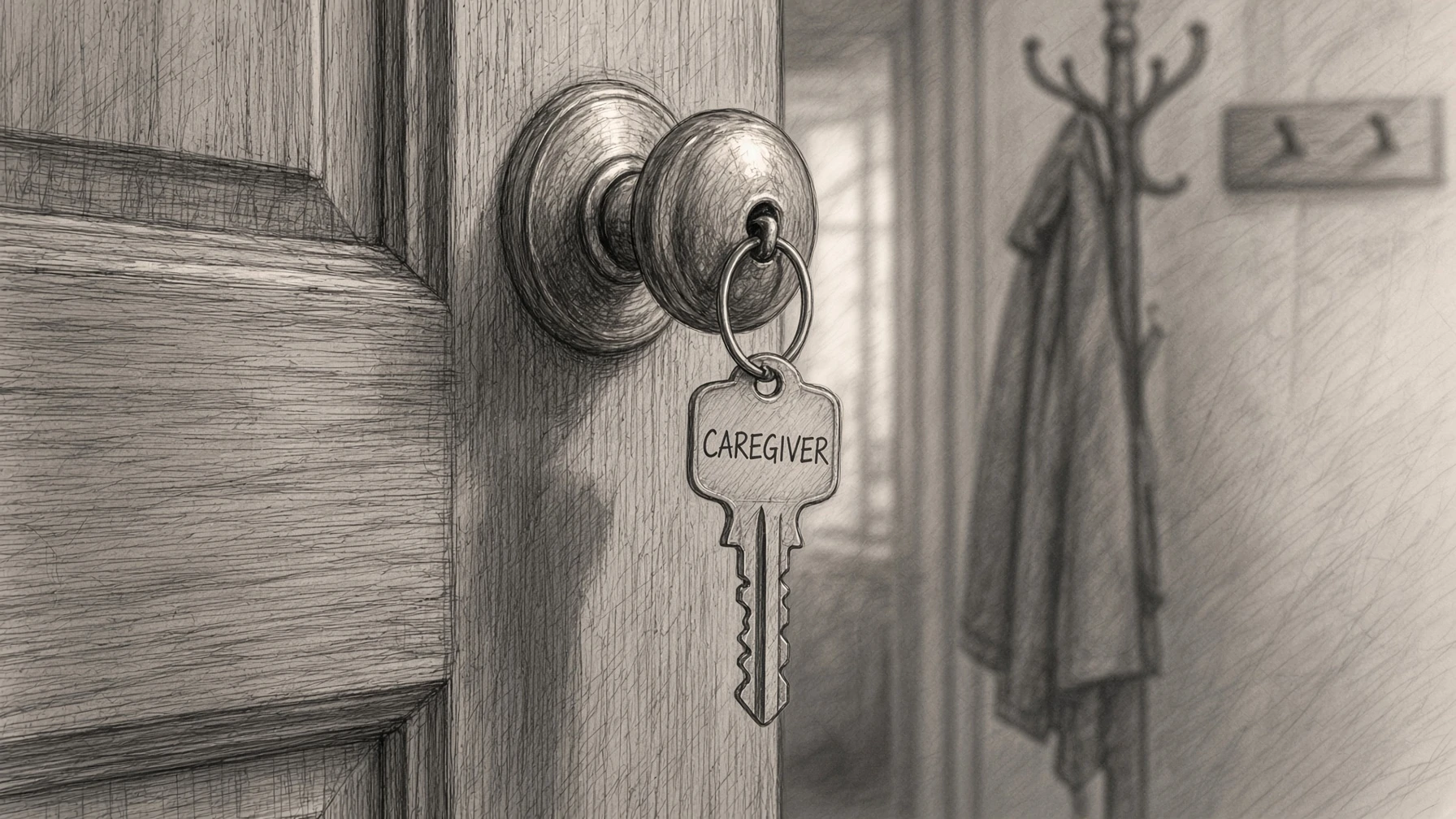
No California law gives an adult caregiver child the right to stay. Unless the will or trust says so, the other heirs can push for a sale, and a co-owner can even ask a court to force one. So if your parent wants the caregiver protected, it has to be written in, and the details matter:
- How long they may stay: six months, a year, two years, until the house sells, or for life. If they sold their own home to move in, they need real time to find a new one.
- Whether they are paid back what they spent out of their own pocket on your parent's care and the house, and how it is counted.
- Who pays what in the meantime: property tax, insurance, utilities, routine repairs, and the big ones like the roof. Many families have the trust set aside a reserve for the house so the other siblings are not paying out of pocket.
- Whether they pay any rent, and what ends the arrangement early: moving out, letting someone else move in, or not paying their share.
- What happens at the end: a sale and an equal split, or the caregiver's first chance to buy the others out at an agreed appraisal.
- Whether the caregiver also receives something extra for the years of care, and whether they are paid now, under the written caregiver agreement described above.
- Whether your parent might ever need Medi-Cal for a nursing home. If so, the caregiving child should keep a written record of the care from the start, and ask the doctor for a letter. A child who lived in the home and kept a parent out of a nursing home for two years or more has protections under Medi-Cal rules that an elder law attorney can explain.
Then your parent tells everyone, in their own words, that this is their decision and why. A brother who hears "your sister gets to stay in the house for a year, because she gave up four years of her life for me" from his mother, while she is alive, has a chance to ask her why and make his peace with it. The same brother hearing it for the first time from a trustee's letter has no one left to ask.
There are many more questions with the same shape. You will not need all of them. Read the bold headings, stop at the ones that are yours, and take those to your parent and the attorney.
The house.
- Sell it, keep it, or let one of you buy the others out. If a sibling may buy, decide how the price is set (an independent appraisal, or the average of two), how long they have to get financing, and what happens if they cannot. Without that, families argue about price for a year while the house sits empty.
- Property tax. Read the Proposition 19 note above before anyone decides to keep the house as a rental. A house kept as a rental, or a vacation cabin, generally gets reassessed.
- A mortgage still on the house. A regular mortgage keeps being owed after the death, and a reverse mortgage comes due and usually has to be paid off, or the house sold, within months. Either one can undo a promised stay unless the plan says where that money comes from.
- Anyone else living there. A grandson in the back room, a sibling who never left. Decide whether they may stay, for how long, and on what terms, so the trustee is not left evicting family.
- The cabin, or any place you all share. If it is kept, the family needs a calendar, a cost split, rules for guests and renting, and a fair way for someone to sell their share. Attorneys often put a shared cabin into its own company or trust for exactly this reason.
- The keys and the clean-out. Who holds the keys after the death, when the family walks through together, the rule that nothing leaves until then, and who leads the clean-out (and whether they are paid for the weekends it takes).
Money while your parent is alive.
- Care comes first. Your parent can say it plainly: my money is for my care first, and whatever is left is the inheritance. Then ask where they want to live as needs grow: home, assisted living or memory care. That way a sibling watching the balance shrink is not the one deciding.
- The sibling with the power of attorney. That person must keep records, but the law only makes them account to your parent, and after the death to the executor. It does not make them account to the rest of you. A sibling who wants to see the books has to ask a court. Your parent can write into the power of attorney that the agent sends everyone a regular summary. That one clause prevents a great many accusations.
- The "convenience" joint account. When a parent adds one child to a bank account to help pay bills, the money in it usually goes to that child at death, no matter what the will says. If the goal is only bill-paying, a power of attorney does the job without changing who inherits, and many banks also offer a convenience signer on the account for the same purpose.
- A child who paid for care out of their own pocket. Write it down at the time: a loan to be repaid from the estate, or a gift. Otherwise it is very hard to prove, and very easy to resent.
- Old gifts and loans. The down payment one child received, the business loan another never repaid. In California, a lifetime gift only counts against a child's share if it was put in writing. A loan is different: it is a debt the estate may be able to subtract from that child's share, but only if it can be proved. So your parent should decide now, in writing, for each one: a gift, a loan to be deducted, or forgiven. Your parent can answer that. You cannot, not after they are gone.
Who gets what, and why.
- Unequal shares. A parent may leave more to the child who did the caring, or to the child with greater need. That is their right. What causes the lawsuit is silence. A signed letter in your parent's own words explaining the reasons, kept with the plan, does what the legal document cannot.
- Promises made out loud. "The truck is yours." "You will get the house for taking care of me." Spoken promises are very hard to enforce, which is exactly why they cause fights. Gather every promise your parent remembers making, decide which still stand, put those in writing, and tell each child which ones are not happening.
- The estranged child. Whether they are included, reduced, or left out, it should be said expressly, never left to look like an oversight. A personal letter can say what the legal language cannot.
- A child with a disability. An outright inheritance can cost them their benefits. A special needs trust, set up by an attorney, is the usual answer, along with naming who will look out for them.
- A child struggling with addiction, debt or a divorce. Their share can stay in a trust and be paid out over time or for specific needs. Telling them kindly, while your parent is alive, matters as much as the clause.
- A child who dies before your parent. Does their share go to their children, to their spouse, or to the surviving siblings? California's default usually sends it to that child's children and nothing to their widow or widower, which is often not what the family expects. Say it.
- A second marriage or a new partner. What the partner receives, whether they may stay in the house for life, and what passes to the children after. A parent who simply trusts the new spouse to "take care of the kids later" leaves that choice entirely to the spouse. And if a parent remarries after signing the plan and never updates it, California law may hand the new spouse a large share anyway, so the plan needs a fresh look after any marriage.
- Taxes. A retirement account and a house of the same value are not equal after taxes. If your parent wants the shares truly equal, an accountant should look at which asset goes to whom.
Who is in charge after.
- The trustee or executor. Not automatically the oldest. Choose for skill and steadiness, and name backups. Co-trustees sound fair, but in California they must agree unanimously unless the trust says otherwise, which is how one sibling's refusal freezes everything. Where the siblings already distrust each other, a licensed professional fiduciary can serve as a neutral trustee.
- Paying a sibling trustee. Whether a sibling trustee is paid for the hundreds of hours it can take, and how. Decide it now, or argue about it later.
- Spouses and in-laws. Decide together whether the siblings' spouses are in the family meeting, and whether they get a say. Many families let them listen and not vote, and say so before the first meeting rather than at it.
- Keeping everyone informed. A trustee has to formally notify the beneficiaries within sixty days of the death, but that is the legal minimum. Agree now on regular updates, and tell everyone up front that settling a trust usually takes many months, longer if a house has to be sold. Silence is what makes a sibling hire a lawyer.
Protecting the plan itself.
- Your parent decides with the attorney, alone. The family conversation is where wishes get heard. The decisions themselves are your parent's, made with their attorney without beneficiaries in the room. That is not a formality. It is what protects the plan if anyone later claims your parent was pressured.
- Sign early, while capacity is not in question. A plan changed in the last months, at a meeting one child arranged, invites a challenge.
- Language that asks the family to get along. A letter of wishes can say, in your parent's voice, how they hope their children will treat each other. It is not binding, and it is often the most read page in the file. Alongside it, an attorney can add clauses that are binding. A "no-contest" clause, which costs a challenger their share, only stops weak challenges in California, not one with real evidence behind it. A clause asking everyone to mediate before going to court is common and sets the family's expectations, though a court may not enforce it; once a dispute does reach court, a judge can order the family into mediation anyway. Clauses forcing binding arbitration are on uncertain ground in California, so ask the attorney.
- The right to visit. Your parent can say in writing that every child may visit and call. Keeping an elder from calls and visitors against their wishes is a form of elder abuse in California, and it is one of the bitterest fights there is.
The everyday things that become big things.
- The pet. Who takes the dog, a backup, and money for its care. California allows a trust for an animal.
- Photos, videos and letters. Who scans them so every child gets copies, and where the originals go.
- The car. The DMV allows a transfer-on-death beneficiary on a car titled to one owner. And decide, with the doctor, who has the conversation when it is time to stop driving.
- Firearms. Who receives each one, and how. In California, a gun given by a parent to a child during life, or inherited under a will or trust, can usually skip the dealer if the person receiving it may legally own it, holds a California firearm safety certificate, and reports it to the state Department of Justice within 30 days. A lifetime gift to anyone else, an in-law for example, generally has to go through a licensed dealer. The rules are strict and change, so have the attorney spell out each transfer. If your parent has dementia, decide now who removes or secures the guns, and how to do it lawfully: a licensed gun dealer can usually store them for a fee, and some local police departments will hold them for safekeeping, so ask before you bring anything in.
- The funeral, and who pays. Burial or cremation, faith and ritual, the obituary, who speaks, and that the estate pays, not one sibling's credit card.
- The traditions. Thanksgiving at the house, the summer trip. Your parent can say which they hope continue, and who they hope will host.
Binding, or not. Some of these have to be done formally to count. Anything about the house, the shares, the trustee, past gifts, a trust for a child with a disability or a child in trouble, and the powers in a power of attorney belongs in documents an attorney drafts. Account titles and beneficiary forms are changed on each institution's own forms. Others can live in the written family summary, in your parent's voice: the care schedule, visiting, how news is shared, how belongings are chosen, the clean-out, the traditions, and the reasons behind the plan. Nobody signs it, and it should say at the top that it is a record of intentions, not a will or a contract. One warning matters more than the rest. A family summary that never makes it into the legal documents is just a piece of paper. Before your parent signs, they should go through the summary line by line with their attorney and make sure every point that needs to bind was actually carried into the will or trust.
It is still your parent's
There is one more thing to settle, and it does not go in any document. It goes in each of you.
Your parent's house, money and belongings are not yours. They are your parent's. While your parent is alive, and in the way they choose to pass them on, they get to decide what happens to them. That includes decisions you think are unfair, unwise, or not what you would have chosen.
For many families this is the hardest part of the whole process, so I will say it plainly. The point of preparing together is not to get your parent to agree with you. It is to find out what they actually want, and then to honor it. If you already know your mother wants the house to go to the sister who cared for her, it is not your job to talk her out of it in a family meeting. Your job is to hear it.
You are allowed to tell your parent how you feel, while they are alive. Saying it can be part of making peace. After that, the choice is theirs, and accepting it is yours.
Sometimes the resistance is not really about the money. A son who was hurt by his father may look at the inheritance as something he is owed: a penance, payment for what went wrong between them. In the language of my work, that is often the Survivor Self keeping score on behalf of the Young Self, trying to protect the part of him that got hurt. The hurt underneath it is real, and it deserves real attention. But an estate cannot pay that debt. No amount of money or furniture repairs a childhood, and treating the inheritance as compensation keeps the old hurt in charge of the relationship, at the very time it could still change. The same thing can happen on the other side. If your parent chooses to reward the years of care, that is theirs to decide and worth putting in writing. What I mean is the caregiver who never asked, and quietly comes to see the house as wages owed. Either way, the inheritance is being asked to settle an old account, and it cannot. Whatever happened between you and your parent, what they own is still theirs to give. Making peace with how they choose to give it is your work, not theirs.
That does not mean pretending nothing happened. If your parent is still here and still able, the more useful conversation may be about the hurt itself, not the house, and I can help you get ready for it. If that conversation is not possible, take the wound somewhere it can be met: a counselor, a trusted friend, and work like mine, which meets it in the body. Then let the will be the will.
When that happens, the question stops being "What do I get?" and becomes "How do we carry out what Mom wanted?" Siblings can answer that question together. It is also the question that lets a parent die knowing their wishes will be respected.
One exception is worth naming. Honoring your parent's wishes assumes they really are your parent's wishes. If you believe someone is pressuring your parent, whether or not they can still think clearly, cutting them off from the rest of the family, or taking or moving their money, that is not a disagreement to accept. It is a concern to raise with their doctor and an attorney, and in California, with your county's Adult Protective Services. If your parent lives in a nursing home or assisted living, the long-term care ombudsman can help too. If anyone is in immediate danger, call 911. Report what you have actually seen, in good faith. This is for your parent's safety, not leverage in a family argument.
Sitting down together: a guided family conversation
Here is the piece most families skip.
All of the above can be done one phone call at a time, sibling by sibling. Most families do it that way, and it is how half the family ends up feeling decided against. The alternative is to sit down together, the whole family and your parent if they are able, once, on purpose, with a steady person in the room whose only job is to keep the conversation safe enough to finish.

When a trained mediator leads it, professionals call it elder mediation, and I think of the whole idea as preparatory mediation. With a social worker, care manager or faith leader, it is usually just called a family meeting. Either way, it is a guided family conversation that happens before there is a dispute, in the hope that there never has to be one. If the word mediation makes you think of divorce, this is the opposite. Nobody is suing anybody. Everyone is in the room because they love the same person.
Two rules make it work.
- Everyone hears the purpose ahead of time. No ambushes. An agenda goes out in advance, and anyone can add to it.
- Feelings get heard before problems get solved. Rushing to solutions is how the deeper issue stays buried.
Is there proof this works? I want to be honest about that. Families who try mediation usually say they were satisfied with it, but the hard research on mediation itself is thin. The stronger evidence is about planning ahead. In one well-known Australian study of hospital patients eighty and older, among those who died during the study, the patients who were offered planning with a trained facilitator had their wishes known and followed 86 percent of the time, compared with 30 percent of those who received usual care, and their families reported less stress, anxiety and depression afterward. Those facilitators were part of a hospital advance care planning program, and the study measured that program, not a family meeting like the one described here. What it shows is that planning ahead, with help, matters. Two California lawyers, Stephen Sulmeyer and Richard Collier, made the same argument in a 2023 issue of California Litigation, the California Lawyers Association's journal: the hard conversations are better had before a parent's death, while there is still a chance to put things right.
Who can guide it. The steady person should be someone with no stake in the outcome. Families use a trained elder mediator, a geriatric care manager (sometimes called an aging life care professional), a faith leader the family trusts, or a family therapist. If your parent is already in hospice, in palliative care or in the hospital, their social worker can often lead or join a family meeting. If your family has none of these people and is not already in open conflict, I can guide it myself; more on that below. If the siblings are already fighting, if someone has decided what they will do with the money, or if anyone has called a lawyer, skip the informal route. Go to a professional mediator, often an attorney who mediates, and sometimes each of you with your own attorney. A settlement reached in a formal mediation can be made legally binding if it is written down, signed by everyone, and says it is meant to be binding. That kind of mediation is worth doing before your parent dies, not after. Your parent's own will and trust still stay theirs to write, with their own attorney.
How the conversation can unfold, in phases
It works best in phases, at whatever pace your parent can manage.
Phase one: your parent first. It begins with your parent, or both parents, without the children in the room: with their attorney, their doctor, or the guide your family chooses. This is where your parent gets to think out loud without an audience: what they want, why they want it, what they are afraid you will fight about, and what they may already have promised to different people. A parent who has never been asked these questions in a quiet room may find they have very clear answers. Even when one of you lives in the house as the caregiver, this part happens without any of the children there.
Phase two: the people who will inherit. Then the siblings, and anyone else close enough to end up in the argument: a stepparent, the spouse of a sibling, an adult grandchild. Many guides talk with each person briefly on their own first, because that is where people say what they cannot yet say in front of everyone. Then the family meets, in person, or by video so a sibling in another state is fully in the room rather than on a speakerphone in the corner. If your parent is well enough, they are part of this meeting, and they explain their wishes and their reasons in their own voice.
Phase three: a written summary. Someone writes down what your parent wants and what the family understood and agreed, issue by issue, in plain language. Ask the guide ahead of time whether they will write it up; many will. If not, choose one person to take notes, ideally not the sibling with the most at stake. Your parent reads it first, then everyone else reads it and corrects it. Nobody signs it. Say at the top that it is a record of a conversation, not a will, a contract, or legal advice. It is a starting point your parent can bring to their attorney.
Phase four: the attorney. Your parent takes that summary to their own estate planning attorney, ideally one they choose themselves. The attorney works for your parent, not for the family, and turns your parent's wishes into a will or trust and the other documents that actually bind. The attorney will go over the decisions with your parent alone, without any of you in the room, because that is what protects the plan if anyone later says your parent was pressured. With the hard conversations already behind them, your parent is more likely to arrive knowing what they want, so more of the attorney's time can go into getting the wording right rather than refereeing.
Phase five: everyone hears the plan. Once the documents are signed, your parent tells the family what the plan is and why, with their attorney's guidance on how much to share, while they are still here to say it. That does not have to include every dollar figure. It does have to include anything that would otherwise come as a shock. If your parent's memory is fading, do not wait for everyone to be in one room. Ask the attorney whether a short letter or recording, in your parent's own words, explaining the plan would help, and make it soon after signing. Then meet again whenever life changes the picture: a new diagnosis, a move, a marriage, a death.
One exception to that order. If your parent has a dementia diagnosis or a serious illness, do not wait for these conversations to sign the basics. The Advance Health Care Directive, the durable power of attorney and the HIPAA release can be signed with an attorney now, alongside phase one, and the will or trust can follow once the family has talked. With dementia, keep meetings short, hold them at your parent's best time of day, and take one subject at a time.
Where I can help
Most of what I do is for the people walking into that room. I work with each of you one at a time, and each session is about you, not the rest of the family. I do not carry messages between you or take sides. The point is that you get there steadier than you would on your own, and have support through everything that comes after. Sometimes I can also be in the room with all of you: guiding the meeting when your family has no one else, or leading a quiet gathering that has nothing to do with the plan.

- Before the hard conversations. A session for you on your own, before the family meets. Most of us walk into these meetings with the Survivor Self already in charge: rehearsing the argument, bracing for the old roles. A session gives your nervous system somewhere to settle first, and gives you room to get clear on what you actually want to say, so you can listen when it is your turn to listen.
- When there is no one else to guide the meeting. I can guide the family meeting myself, or take the notes while someone else guides it. I come with no stake in the outcome: I do not weigh in on who gets what, and I never take a role in your parent's plan or accept gifts from them. If I have already worked one on one with any of you, I tell the whole family before we begin, and if that leaves anyone feeling I am less than neutral, I step back to note-taker or help you find another guide. Ideally your parent pays, or the family shares the cost, rather than one of you. When I spend time alone with your parent, it is only to help them prepare what they want to say to the family; who gets what stays between your parent and their attorney. If I see signs that your parent is being pressured, I pause the planning and suggest they go over their wishes with their attorney alone, and where it is serious, I raise it the way described earlier in this post. I am not a mediator or an attorney, so this is not a formal legal mediation, nothing said in the room is legally privileged, and the written summary is a plain record of the conversation for your parent to take to their own attorney, not a legal document. If the siblings are already fighting over the money, you still need the professional mediator described above. I offer this by the hour, or for a half day or a full day, priced the same way as my meditation journeys.
- A family gathering that is not about the plan. A private sound bath or a guided breath session at your parent's home, so the whole family shares something quiet together before or after the hard talks. It is gentle: your parent can simply rest and listen, nobody has to do anything they do not want to, and if your parent is ill I check with their hospice or care team first. Nothing gets decided. Everyone just gets to be in the same room, breathing, with the person they all love.
- When your parent's wishes are hard to accept. If the plan is not what you hoped for, or an old hurt keeps getting in the way, this is the heart of my work: meeting the part of you that is keeping score, and the younger part it is protecting, so you can make your peace with what your parent wants.
- For the one doing the caregiving. This is often the sibling who has not been touched kindly or slept a full night in months. Come to the studio, or I can come to you with a mobile session at home, so you do not have to leave the house.
- For the sibling far away. Distance can leave you feeling helpless and shut out. We can work together in a virtual session, wherever you live, so you have somewhere to put it besides the next phone call home.
- For your parent, if they would like it. Slow, gentle comfort touch. Nothing medical. Before I begin, I check with their hospice or care team, or their doctor. It happens only with your parent's yes in the moment, or their health care agent's if they can no longer give it, and I stop at the first sign from their body that they do not want it. I do not weigh in on their plans, and I never take a role in them: not agent, trustee, executor or beneficiary.
- After the money has already come between you. If the inheritance has already split your family, you are exactly who I have in mind. That kind of loss lives in the body the same way grief does, and it deserves the same care: a place to put down what happened, the old roles it stirred up, and the relationships you are not ready to give up on.
- After your parent dies. Grief work that meets the loss in the body, at your own pace, for as long as you need it. There is more about this near the end of this post.
The last months
Preparation does not end when the documents are signed and the family has met. The last months and weeks are their own territory, and a few things are worth knowing before you are in them.
Ask about palliative care and hospice early. Palliative care is comfort and symptom care for a serious illness, and it can begin at diagnosis, alongside treatment. Hospice is for when the doctors expect six months or less if the illness runs its usual course and your parent chooses comfort over cure. Six months is an estimate, not a deadline: people can stay on hospice longer as long as they still qualify. Choosing hospice is not a one-way door either. Your parent can stop it to try a treatment and come back later if they still qualify. Most hospice care happens at home, with a nurse who visits and is reachable by phone around the clock, and Medicare covers the equipment, the comfort medications, and grief support for the family. Hospice does not put a caregiver in the house around the clock, and it does not pay room and board in a facility. The daily hands-on care is still the family's, or paid help's, which is one more reason to decide the care schedule together. Hospice can arrange a short stay in a facility, up to five days at a time, so the family can rest. Hospice teams often hear families say they wish they had called sooner.
Consider an end-of-life doula. A doula is a non-medical companion for the dying person and the family: helping with legacy projects, planning the vigil, giving caregivers a break. Hospice handles the medical side and brings social workers, chaplains and volunteers too. A doula adds unhurried, non-medical time with the family. Doula work is not licensed, so ask about training and experience.
Know what you may see. Hospice nurses will tell you that in the last days, people often sleep more, withdraw, and lose interest in food and water. Breathing may pause or change rhythm. Hands and feet may turn cool or blotchy. The noisy breathing families sometimes hear near the end is very hard to listen to, and does not seem to be painful for the person. Not everyone goes through every sign. Whatever you see, keep talking to them. Most people can still hear after they can no longer speak. Talk to your parent, not about them, and say who you are when you come into the room.
Remember the grandchildren. Children do better with plain words like "died" and "dying" than with "passed away" or "went to sleep," which can confuse them. Let them visit, ask questions, and take part in the rituals if they want to.
Say the four things. The palliative care physician Ira Byock, after decades at the bedside, distilled what matters most into four sentences: please forgive me, I forgive you, thank you, I love you. They do not need to wait for the last day. Some parents also write a legacy letter, sometimes called an ethical will, that passes on values and blessings rather than property. It can be written and shared while everyone is still well.
Know who to call. If your parent is on hospice and dies at home, the death is expected. Call the hospice number, not 911. A hospice nurse comes, confirms the death, handles the paperwork, and helps you contact the funeral home. You do not have to rush. It is normal to sit with your parent for a while, and the funeral home comes when the family is ready. Calling 911 instead brings responders who are trained to attempt resuscitation. If there is no hospice, ask your parent's doctor now what to do when the time comes. In California, a death becomes a matter for the coroner when no doctor or hospice nurse has seen the person in the last twenty days.
Know your choices for afterward. California families do not have to use a funeral home to care for their person's body. Home funerals are legal, and embalming is not required. Natural organic reduction, sometimes called human composting, is expected to become available in California beginning in 2027. A funeral home must give you its price list, and apart from its basic services fee, you may buy only the goods and services you want, including a casket or urn bought elsewhere.
The first days and weeks after
When the death comes, a family with a plan has a short list instead of a crisis. Here is the shape of it.
The first day. Call hospice if your parent was enrolled, or the doctor if the death was expected without hospice. Call 911 if the death was unexpected or you are unsure. Take the time you need with your parent. Then call the funeral home, or begin the home funeral you planned.
The first week. Order certified death certificates. The funeral home usually does this for you. Banks, insurers and retirement plans each want a certified copy, not a photocopy, so count the institutions on your document map and add a few. Make sure the funeral home reported the death to Social Security, which then notifies Medicare. Any Social Security payment for the month of death, which arrives the following month, has to go back, so do not cash it. Secure the house, the car and any medications. Find the will and the trust.
The first month. The executor or successor trustee begins the formal work, ideally with an attorney. Notify the life insurers, banks, pension or retirement plans, the three credit bureaus (to prevent identity theft), the DMV, utilities, and subscriptions. If your parent received Medi-Cal, the executor or trustee has to notify the state. Forwarding your parent's mail takes the executor's proof of appointment, not only a death certificate.
Before anyone acts on the guns, the house, or taxes, call the attorney. Inherited firearms in California have their own reporting rules, an empty house raises insurance questions, and taxes have deadlines of their own.
None of this has to be done in a single week, and none of it has to be done by one person. If you made the role list above, everyone already knows their part.
Grief, before and after
Grief does not wait politely for the death, and it does not leave on a schedule after it. It lives in the body. People describe it the same way, over and over: the chest feels heavy, the throat tight, the breath never quite goes all the way down, and some days there is a strange numbness where feeling used to be.
What happened between siblings during the dying also stays in the family. The roles that came back do not always leave once the funeral is over. A family that prepared together has a better chance of grieving together, instead of splitting into the ones who did everything and the ones who were not told.

My grief work meets grief where it lives, in the body, gently and at your own pace. You never have to tell the whole story, and you never have to perform being okay. If you are also seeing a grief counselor, joining a support group, or talking with your doctor, this sits comfortably alongside that care. And if grief has made daily life hard to manage, please talk with your doctor or a licensed counselor as well. If you ever have thoughts of harming yourself, call or text 988, any time.
The card
Print this. Put it on the refrigerator next to the POLST.
Preparing together: the short list
1. Ask your parent: who should speak for you if you cannot?
2. Sign while they can: Advance Health Care Directive, POLST if seriously ill, durable power of attorney for finances, HIPAA release.
3. Will or trust, with every beneficiary form and account title checked.
4. Legacy contacts set on the phone and email.
5. Funeral wishes written down, copies with the family, not only in the safe deposit box.
6. One page that says where everything is. Two people know where it lives.
7. Roles named out loud: agent, backup, executor or trustee, care lead, updates, the far-away jobs.
8. The hard questions settled: the caregiver and the house, care first, old gifts and promises, unequal shares and the reasons.
9. The belongings: stories first, then a process everyone agrees to.
10. Your parent first, then the family together, with a neutral guide. Write it up. Then the attorney.
11. It is still your parent's. Honor what they want.
12. Please forgive me. I forgive you. Thank you. I love you.
Where to start, today
Pick one thing. Not the whole list.
Ask your parent the one question: who do you want speaking for you if you cannot speak for yourself? Or text your siblings this post with a single line: "Can we talk about Mom while she can still be part of it?"
That is it. One question, or one text. The rest follows from there.
If you would like help with any of it (getting yourself ready for the hard conversations, a guide for your family meeting, a sound bath or breath session for the whole family, the months of caregiving, the grief afterward, or what the inheritance has already done to your family), start with a free video consultation. We will talk about what your family is facing and whether I am the right person to help. It is genuinely fine to use that call to decide I am not. You can also send me a message first if that feels easier.
Ready to Start Your Healing Journey?
Start with a free 15-minute video call. We talk through what you are looking for and whether this work is a good fit, with no commitment either way.